READ THE PRODUCT PANEL
The front of a cosmetic carton is advertising copy; the back panel is a legally mandated chemical declaration. Learn how to parse INCI order, concentration markers, and stability symbols.
1. HOW INCI LISTS ARE GOVERNED GLOBALLY
The International Nomenclature of Cosmetic Ingredients (INCI), established in the 1970s by the Personal Care Products Council (PCPC, formerly CTFA) and enforced under frameworks including the US FDA Fair Packaging and Labeling Act (21 CFR 701.3) and Regulation (EC) No 1223/2009 in the European Union and UK, standardizes ingredient names across borders. Whether you buy a moisturizer in London, Chicago, Tokyo, or Sydney, chemical compounds use uniform English terms (such as Tocopheryl Acetate) while minimally processed botanical extracts use Carl Linnaeus binomial Latin names (such as Centella Asiatica Extract or Butyrospermum Parkii Butter).
The First Five Rule (The Vehicle Chassis)
All ingredients present at concentrations above 1% by weight must be listed in strict descending order of predominance. In 90% of skincare formulations, the first five ingredients constitute 75% to 85% of the bottle's contents. Before scanning the bottom of the list for exotic extracts, read the first five names to classify the vehicle:
- Water + Glycols + Polymer: Aqua, Propanediol, Butylene Glycol, Glycerin, Niacinamide... → Oil-free aqueous serum or hydrating toner.
- Water + Glycerin + Esters/Silicones + Fatty Alcohols: Aqua, Glycerin, Caprylic/Capric Triglyceride, Dimethicone, Cetearyl Alcohol... → Classic oil-in-water emulsion lotion or cream.
- Hydrocarbons/Silicones + Water + Polyglyceryl Emulsifier: Petrolatum, Aqua, Paraffinum Liquidum, Ceresin, Lanolin Alcohol... → Heavy water-in-oil occlusive ointment.
2. HOW TO LOCATE THE 1% THRESHOLD LINE
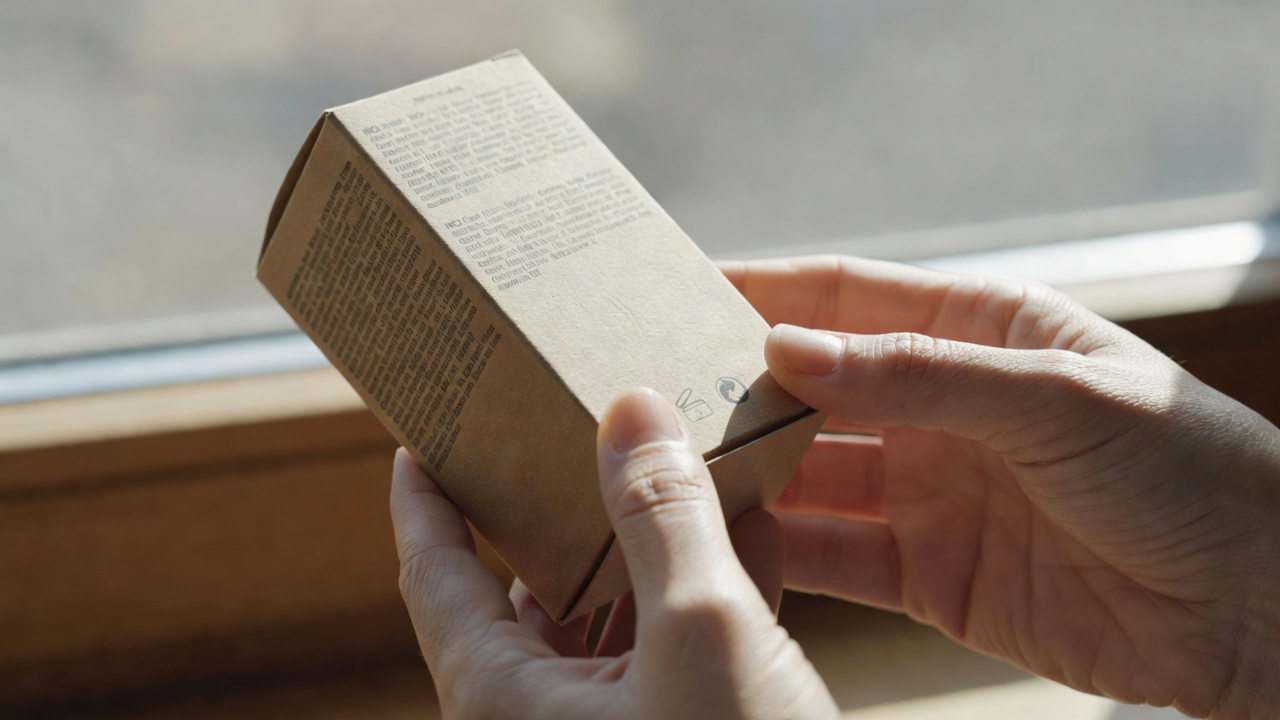
Regulatory law allows manufacturers to list any ingredient present at 1% or less in arbitrary order after all ingredients above 1%. Why? To protect trade secrets, and so brands can push impressive-sounding botanicals or peptides to the front of the sub-1% block while hiding preservatives and pH adjusters at the very bottom.
You can spot the invisible 1% dividing line by memorizing four categories of ingredients that are either legally capped at or below 1%, or become functionally unworkable above 1%:
| Marker Ingredient | Typical Usage Cap | What It Tells You When You Spot It |
|---|---|---|
| Phenoxyethanol | Max 1.0% (EU/UK/US industry standard preservative limit) | Every ingredient listed near or after Phenoxyethanol is present at ≤ 1.0% |
| Sodium Hyaluronate (High MW) | 0.1% – 1.0% (Turns water into solid jelly above 1.5%) | Marks the transition into the 1% and sub-1% zone (note: a "2% Hyaluronic Acid" claim usually includes water weight of a 1% stock solution or hydrolyzed fragments) |
| Xanthan Gum / Carbomer | 0.2% – 0.8% (Rheology thickeners) | Marks the sub-1% zone; anything below these thickeners is present in trace or milligram amounts |
| Disodium EDTA / Sodium Hydroxide / Citric Acid | 0.05% – 0.5% (Chelators and pH buffers) | Traces at the bottom of the formula |
Important Caveat — Sub-1% Does Not Always Mean Useless ("Fairy Dusting"): If a cream claims to be a "Glycolic Acid Resurfacing Treatment" or "Niacinamide Barrier Cream" and those ingredients sit below Phenoxyethanol (<1%), that is marketing puffery ("fairy dusting"), because glycolic acid requires 5%–10% and niacinamide requires 2%–5%. Conversely, potent signaling molecules like Retinol (0.1%–0.5%), Retinaldehyde (0.05%–0.1%), Salicylic Acid (0.5%–2.0%), Madecassoside (0.1%–0.5%), and Copper Tripeptide-1 (0.01%–0.1%) are biologically active at fractions of a percent and should appear below the 1% line.
3. DECODING PACKAGING SYMBOLS AND MARKETING CLAIMS
PAO (Period After Opening) vs. Expiration Date
- The Open Jar Icon (PAO — 6M, 12M, 24M): Mandated across the EU and UK for products with an unopened shelf life exceeding 30 months. "6M" means the preservative challenge test (ISO 11930) and active stability are guaranteed for 6 months after you break the seal. Write the month you open an L-ascorbic acid or retinol bottle on the bottom with a permanent marker.
- The Hourglass Icon / EXP Date: Required when a product's unopened stability is under 30 months, or when regulated as an OTC drug in the US (such as sunscreens and acne treatments). Never use a sunscreen past its printed expiration date; UV filters can crystallize or separate out of the emulsion phase, leaving invisible gaps in protection.
- Airless Pumps vs. Dropper Pipettes vs. Open Jars: Every time you unscrew a glass dropper pipette and squeeze the rubber bulb, you pump fresh oxygen and bathroom humidity into the liquid. Oxygen-sensitive actives (Retinol, Retinaldehyde, L-Ascorbic Acid) last significantly longer in opaque airless pump dispensers or collapsible aluminum tubes than in clear glass dropper bottles or wide-mouth jars.
Unregulated Marketing Terms to Question
- "Hypoallergenic" & "Dermatologist Tested": Neither term has a statutory federal definition under US FDA cosmetic regulations. "Dermatologist tested" can mean a single dermatologist reviewed a 20-person patch test where nobody suffered blistering within 24 hours.
- "Fragrance-Free" vs. "Unscented": "Fragrance-free" means no synthetic parfum or aromatic essential oils were added. "Unscented" often means the formulator added a masking fragrance (such as hexyl cinnamal, linalool, or rose flower oil) to cover up the fatty smell of raw surfactants and oils. Check the bottom of the INCI list for the EU 26 fragrance allergens (Limonene, Linalool, Citronellol, Geraniol, Eugenol).
- "Non-Comedogenic": Historically tested by applying raw ingredients to the inner ears of rabbits—a model long criticized by dermatologists for poor correlation with human facial follicles. A thick balm labeled "non-comedogenic" can still trigger acne mechanica or miliaria if applied too heavily in humid weather.