SORT BY FUNCTION
Retail shelves invent dozens of micro-categories—mist-toners, essence-lotions, sleeping packs, pre-serums—to convince shoppers that a routine requires ten steps. Formulation chemistry recognizes four distinct roles.
1. CLEANSERS: SURFACTANT SYSTEMS AND PH BALANCE
The sole biological purpose of a facial cleanser is controlled soil removal. Throughout the day, the skin surface accumulates a hydrophobic mixture of sebum (triglycerides, wax esters, squalene), corneocyte debris, environmental soot, and water-resistant polymers from sunscreens or cosmetics. Plain water cannot dissolve this hydrophobic film, so formulators rely on amphiphilic molecules called surfactants.
Every surfactant features a hydrophilic (water-loving) head and a lipophilic (oil-loving) tail. When massaged onto damp skin, surfactant tails surround oil droplets to form spherical micelles that rinse away cleanly. However, aggressive anionic surfactants with small head groups—such as Sodium Lauryl Sulfate (SLS) or high-pH true soaps (saponified oils at pH 9.0–10.5)—penetrate the stratum corneum, bind to keratin proteins, and extract essential intercellular ceramides and free fatty acids.
How to Classify Your Cleansers
- Anhydrous Cleansing Oils & Balms: Built on ester oils (ethylhexyl palmitate, caprylic/capric triglyceride) or plant oils paired with non-ionic emulsifiers (Polysorbate 80, PEG-20 Glyceryl Triisostearate). Designed as an evening first step to dissolve tenacious silicones and organic UV filters via "like dissolves like" solvency before adding water to emulsify.
- Syndet Gel & Foam Cleansers: Formulated at skin-neutral pH (4.5–5.8) using amphoteric and mild anionic surfactants with larger micelle structures—such as Cocamidopropyl Betaine, Sodium Cocoyl Isethionate, Disodium Laureth Sulfosuccinate, and Decyl Glucoside. Ideal as a single morning wash or evening second cleanse.
- Emulsion Cream & Milk Lotions: Low-foaming oil-in-water emulsions containing high levels of glycerin and fatty alcohols (cetyl or stearyl alcohol) alongside ultra-mild non-ionic surfactants. Best suited for dry, eczema-prone, or retinoid-sensitized skin.
- Micellar Waters: Dilute aqueous dispersions of non-ionic surfactants (such as Poloxamer 184 or PEG-6 Caprylic/Capric Glycerides). While convenient for travel, leaving surfactant micelles on compromised skin without a water rinse can gradually increase transepidermal water loss.
Sorting Rule: Wash-off cleansers remain on the skin for 30 to 60 seconds. Unless a cleanser contains an active proven to deposit during brief contact—specifically 1%–2% Salicylic Acid or 2.5%–5% Benzoyl Peroxide—do not pay extra for expensive peptides, botanical stem cells, or vitamin C in a wash-off bottle. Those water-soluble extras wash straight down the drain.
2. TREATMENTS: CONCENTRATION, VEHICLE, AND TARGET
Treatments are leave-on formulas engineered to alter a specific physiological pathway: accelerating or normalizing desquamation, downregulating tyrosinase to fade hyperpigmentation, reducing Cutibacterium acnes proliferation, or stimulating dermal extracellular matrix synthesis. Whether packaged as a watery toner, a dropper serum, an ampoule, or an ointment tube, if a bottle contains a biologically active compound at an effective concentration and pH, it counts as a treatment.
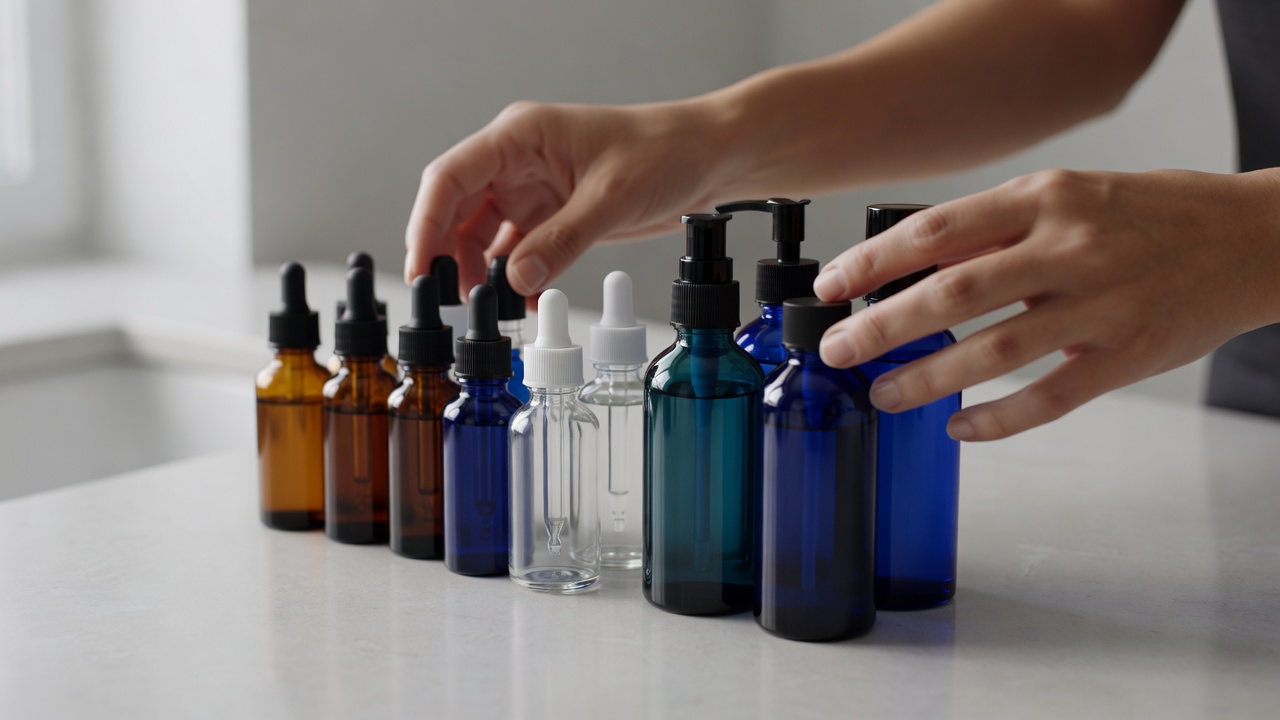
Why Toners, Essences, and Serums Often Overlap
Historically, "toners" were alcohol-heavy astringents used to remove soap scum after washing with alkaline bar soap. Modern syndet cleansers made pH-resetting toners obsolete. Today, brands sell two completely different products under the name "toner" or "essence":
- Acid/Exfoliating Toners: Aqueous solutions of glycolic, lactic, mandelic, or salicylic acid buffered between pH 3.2 and 4.0. In your routine index, classify these strictly as Exfoliating Treatments, never as harmless daily prep water.
- Hydrating Toners & Essences: Low-viscosity solutions of water, glycerin, butylene glycol, panthenol, or beta-glucan. Classify these as Lightweight Humectant Modifiers—an optional booster step to dampen the skin before applying moisturizer.
3. MOISTURIZERS: THE THREE-PILLAR EMULSION MATRIX
The outermost layer of the epidermis, the stratum corneum, functions on a "brick and mortar" architecture first described by Dr. Peter Elias. Flattened, protein-rich corneocytes ("bricks") are embedded in a continuous intercellular lipid matrix ("mortar") composed of approximately 50% ceramides, 25% cholesterol, and 15% free fatty acids by weight. When ambient humidity drops or surfactants strip these lipids, water evaporates rapidly into the air—a metric dermatologists measure as Transepidermal Water Loss (TEWL).
An effective moisturizer combines three functional ingredient classes in ratios tailored to your sebum output and climate:
| Moisturizer Pillar | Mechanical Action | Representative INCI Ingredients | Best Suited For |
|---|---|---|---|
| Humectants | Attract and bind water molecules from the deeper viable epidermis and humid environments via hydrogen bonding | Glycerin, Urea, Sodium PCA, Panthenol, Sorbitol, Hyaluronic Acid, Propylene Glycol | Dehydrated skin; must be paired with an occlusive in dry climates (<40% humidity) |
| Emollients | Fill micro-fissures between desquamating corneocytes to smooth surface roughness and restore lipid flexibility | Squalane, Caprylic/Capric Triglyceride, Jojoba Esters, Ceramides (NP, AP, EOP), Cholesterol, Cetearyl Alcohol | Rough texture, flaking, barrier repair across all skin types |
| Occlusives | Form an inert hydrophobic surface film that physically blocks water vapor escape (petrolatum reduces TEWL by >98%) | Petrolatum, Dimethicone, Mineral Oil (Paraffinum Liquidum), Lanolin, Shea Butter (Butyrospermum Parkii), Beeswax | Dry skin, winter wind exposure, overnight retinoid buffering, post-procedure recovery |
Gel-Cream vs. Rich Balm: A "gel moisturizer" for oily skin uses high humectants and volatile silicones (cyclopentasiloxane or light dimethicone) with minimal heavy waxes. A "barrier repair balm" increases the ratio of petrolatum, shea butter, and physiological lipids.
4. SUN PROTECTION: UV FILTER FILMS AND REGULATORY RATINGS
Every pigment-fading serum, collagen-supporting retinoid, and barrier cream fails if unprotected skin is exposed daily to solar radiation. Ultraviolet B (UVB, 290–320 nm) causes direct DNA pyrimidine dimers and erythema (sunburn), and is measured by the Sun Protection Factor (SPF). Ultraviolet A (UVA, 320–400 nm) penetrates deeper into the dermis, generating reactive oxygen species (ROS) that activate matrix metalloproteinases (MMPs) to degrade collagen and trigger persistent pigment darkening—even through window glass and cloud cover.
Understanding Global Filter Categories
- Inorganic (Mineral) Filters: Zinc Oxide and Titanium Dioxide. Zinc oxide provides broad attenuation across UVB, UVA2, and long-wave UVA1, whereas titanium dioxide excels in UVB and short UVA2. Ideal for highly reactive skin or rosacea, though higher concentrations can leave a visible cast on deeper skin tones unless micronized or tinted with iron oxides.
- Organic (Chemical) Filters: Carbon-based aromatic rings conjugated with carbonyl groups that absorb UV photons and dissipate the energy as harmless thermal vibrations. In the United States, the FDA OTC sunscreen monograph treats sunscreens as over-the-counter drugs, relying on classic filters such as Avobenzone, Homosalate, Octisalate, and Octocrylene. In the European Union, UK, Japan, South Korea, and Australia, regulatory frameworks have approved newer photostable broad-spectrum filters with higher molecular weights (>500 Daltons)—such as Bemotrizinol (Tinosorb S), Bisoctrizole (Tinosorb M), Drometrizole Trisiloxane (Mexoryl XL), and Diethylamino Hydroxybenzoyl Hexyl Benzoate (Uvinul A Plus).
Application Rule: SPF testing laboratories apply sunscreen at an exact density of 2.0 milligrams per square centimeter of skin. For an adult face, neck, and ears, that equals roughly 1.25 milliliters (a generous quarter-teaspoon or two full finger lengths). Relying on SPF 15 inside a lightly dabbed liquid foundation delivers only a fraction of the labeled protection.